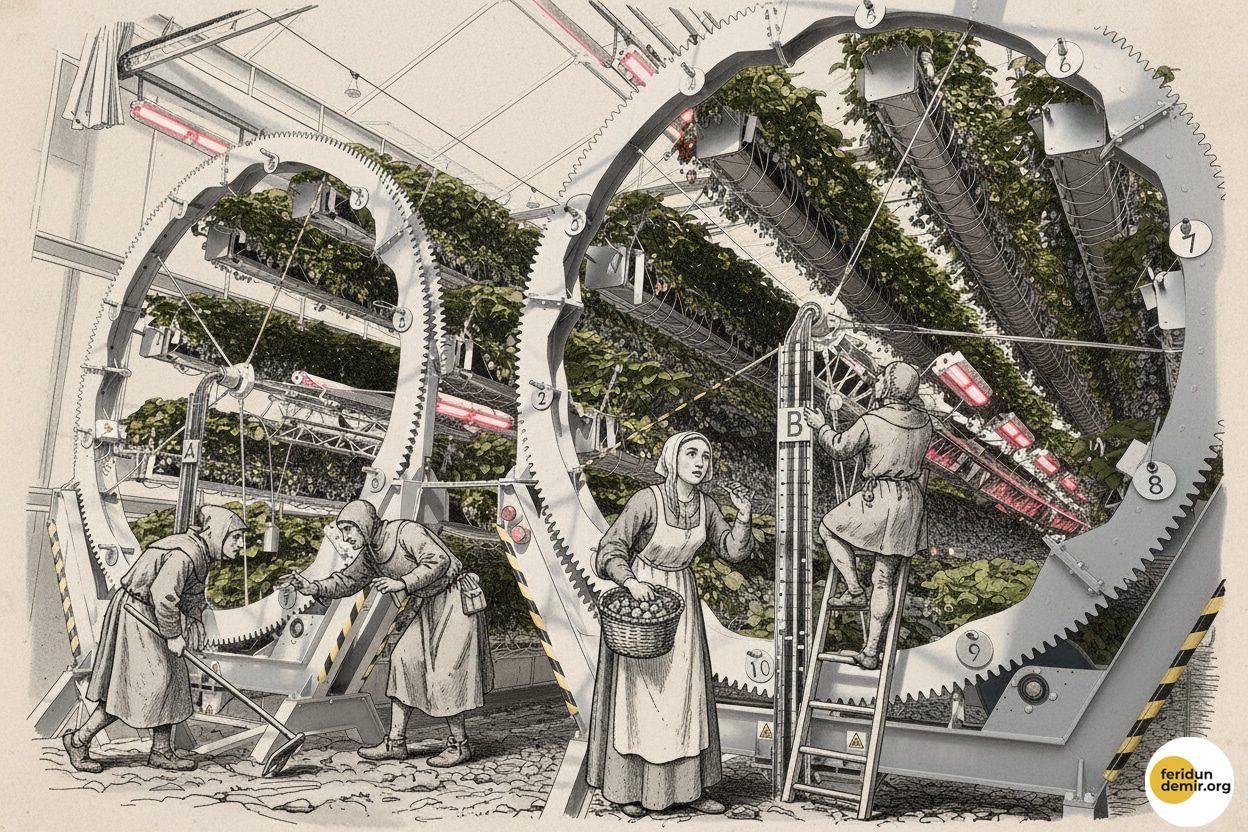
At first glance, mathematics—especially set theory—seems completely detached from everyday life. Abstract symbols, axioms written on a blackboard, cold logical structures. Nothing to do with factories, offices, or fields.
And yet, modern set theory (ZF) tells us something radical and surprisingly political:
There is nothing that is not a set.
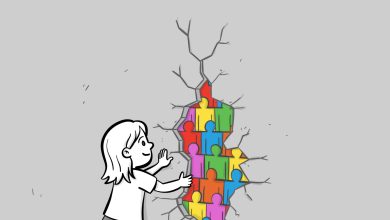
In this framework, even what we call an “element” is itself a set—containing other elements, relations, and structures. There are no isolated points. No pure, self-sufficient atoms.
Now let’s take this idea out of the classroom and into social reality.
Is There Such a Thing as a “Mere Individual”?
In everyday language, we casually say “employee,” “worker,” or even “just a staff member.”
The phrase does important ideological work: it reduces a person to a replaceable unit.
But mathematics objects.
An element is never empty.
A worker is not a dot on a spreadsheet. A worker carries:
- labor power,
- time and exhaustion,
- skills and discipline,
- debts, fears, expectations,
- a lived history shaped by necessity.
In other words, a worker is not a simple element.
A worker is a structured set.
The moment you call someone a “worker,” you have already placed them inside a system of relations.
To Say “Worker” Is to Say “Class”
In mathematics, an element cannot exist without a set to which it belongs.
Otherwise, the definition collapses.
The same applies socially.
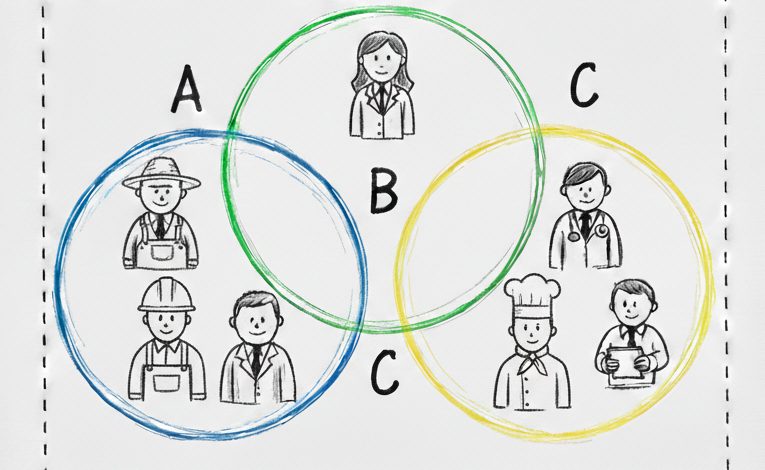
If there is a worker, then there must be a working class.
This is not ideology. It is logic.
Selling labor power for wages, living under economic dependence, being subject to exploitation—these are not individual quirks. They are defining properties of a set.
The idea of a “classless worker” is as absurd as an element without a set. It sounds neutral, but it is mathematically—and politically—meaningless.
Every Worker Is a Subset
Marxism is often accused of “flattening” individuals. In reality, it does the opposite.
Each worker is a subset:
- shaped by a specific life trajectory,
- marked by particular struggles,
- carrying unique contradictions.
But when these subsets unite (∪), something emerges that no individual could produce alone:
a social class.
Class does not erase individuality.
It gives it structure, direction, and historical meaning.
Where the Illusion Begins
The dominant ideology of our time insists on one idea above all:
“You are on your own.”
“I’m a worker, but class doesn’t define me.”
“I’m different.”
“I’m outside the system.”
Set theory would laugh.
As long as you are an element,
you belong to a set.
You inherit its conditions.
You cannot escape its logic by denying its name.
This is not moral judgment.
It is structural reality.
Conclusion: Class Consciousness as Logical Awareness
Perhaps class consciousness is not some obscure doctrine or heavy theory.
Perhaps it begins with a simple realization:
“I am not an isolated point.
I exist within a set.
And that set exists through me.”
To call someone a “worker” is not merely to label them.
It is to locate them within a social equation.
Mathematics already knows this.
The question is whether society is ready to admit it.
Share this content:
Discover more from Feridun Demir
Subscribe to get the latest posts sent to your email.