The Evolution of Superhero Cartoons: A Cinematic Journey Through the Decades

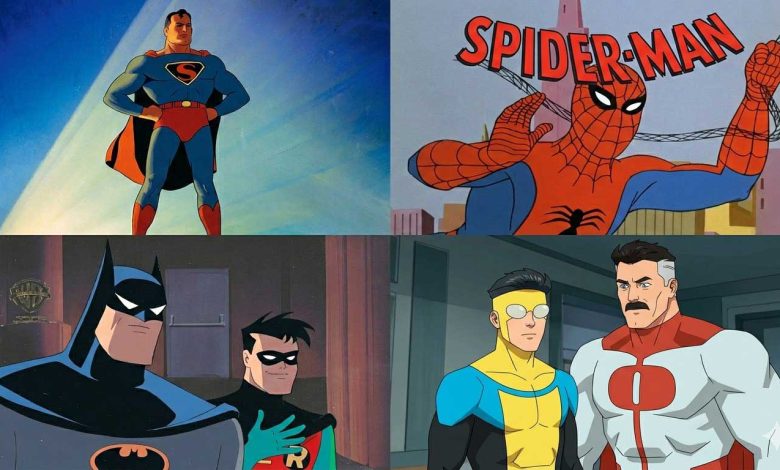
Do you remember those weekend mornings? The peaceful silence of the house, the soft glow reflecting off the television screen, and that surge of adrenaline as the first frame of your favorite hero appeared. Regardless of where we grew up, superhero cartoons were never “just for kids.” They are a living history of our collective imagination, a mirror of our shifting societal values, and a grand playground for the most ambitious animators in the industry.
From the hand-painted cels of the 1940s to the mind-bending “Spider-Verse” aesthetics of today, let’s peel back the layers of this incredible artistic evolution.
1. The 1940s: The Golden Standard of Fleischer Studios
The journey didn’t start with a whimper; it started with a masterpiece. In 1941, Fleischer Studios brought Superman to the big screen. These weren’t average cartoons; they were high-art cinema.
Using a technique called rotoscoping (tracing over live-action footage), the creators achieved a fluid, muscular realism that remains breathtaking even 80 years later. In a world overshadowed by global conflict, these shorts were more than entertainment—they were symbols of hope. They established the “Golden Age” visual language: the billowing cape, the soaring orchestral scores, and the clear-cut battle between light and shadow.
2. The 1960s & 70s: Colors, Constraints, and a Changing World
As superhero stories moved from movie theaters to the small screens in our living rooms, budgets shrank, but creativity took a different turn. The 1960s gave us the iconic Spider-Man (1967). While the animation was technically “limited”—reusing the same swing cycles to save costs—the vibrant colors and unforgettable jazz-fusion themes captured the era’s energy perfectly.
By the 70s, shows like Super Friends introduced a more instructional tone. Heroes weren’t just fighting villains; they were teaching universal values. This decade was also a crucial turning point for representation, planting the seeds for the diverse and inclusive worlds we see in modern animation.
3. The 1990s: A Dark Renaissance
If there is a “Holy Grail” of superhero animation, it is undoubtedly the 1990s. Batman: The Animated Series (1992)changed everything. Bruce Timm and Eric Radomski pioneered the “Dark Deco” style—painting on black paper instead of white to create a moody, noir-inspired atmosphere.
The 90s proved that animation could be a sophisticated medium for psychological drama. We saw villains with tragic backstories and heroes who struggled with their own identities. It was a revolution that spoke to adults as much as it did to children.
4. The 2000s & 2010s: The Digital Leap and Global Influence
The turn of the millennium brought CGI (Computer-Generated Imagery) and digital ink-and-paint into the mainstream. We also began to see a fascinating “Global Exchange,” as Western superhero shows drew heavy inspiration from Japanese Anime—more kinetic action, sharper character designs, and long-form storytelling arcs that spanned entire seasons. Animation became more fluid, more dynamic, and truly international.
5. The Modern Era: Artistic Freedom
Today, we are in a “Post-Modern” phase. Animation is no longer just trying to look “realistic”; it is striving to be “artistic.” Modern series experiment with variable frame rates, mixed media, and street-art-inspired visuals.
The narrative has shifted toward exploring the vulnerability of the hero. Today’s stories deal with the weight of legacy, the complexity of justice, and the blurred lines of morality. We no longer just want a hero who can save the world; we want a hero who understands the human cost of doing so.
An Artist’s Perspective
As a cartoonist and artist, looking back at this evolution is deeply inspiring. It reminds us that tools—whether a traditional nib pen or a digital tablet—are just a means to an end. The goal has always been the same: to make the impossible feel real, and to remind audiences everywhere that anyone, regardless of their origin, can stand up for what is right.
Share this content:
Discover more from Feridun Demir
Subscribe to get the latest posts sent to your email.