In the world of contemporary animation, most productions bombard the viewer with constant noise, rapid-fire dialogue, and over-stimulated detail. However, in 2001, a silhouette appeared on Cartoon Network that cut through the noise with a single, disciplined sword stroke: Samurai Jack. Created by Genndy Tartakovsky, this series didn’t just tell a story; it reclaimed the graphic legacy of UPA and the “clear line” discipline, translating them into a sophisticated, modern cinematic language.
1. The Art of Visual Silence
The greatest courage of Samurai Jack is its commitment to silence. In an industry where “dead air” is often feared, Tartakovsky embraced it. Many episodes function like silent films, where a single drop of water or the rustle of leaves carries more weight than a page of script.
By stripping away dialogue, the show forces the viewer to focus on composition, lighting, and rhythm. This isn’t just minimalism for the sake of being “simple”; it is the purest form of modernist storytelling, where the visual arc defines the emotional stakes. It proves that a character’s resolve is better shown through a steady gaze than a heroic monologue.
2. Geometry Over Anatomy: The No-Outline Aesthetic
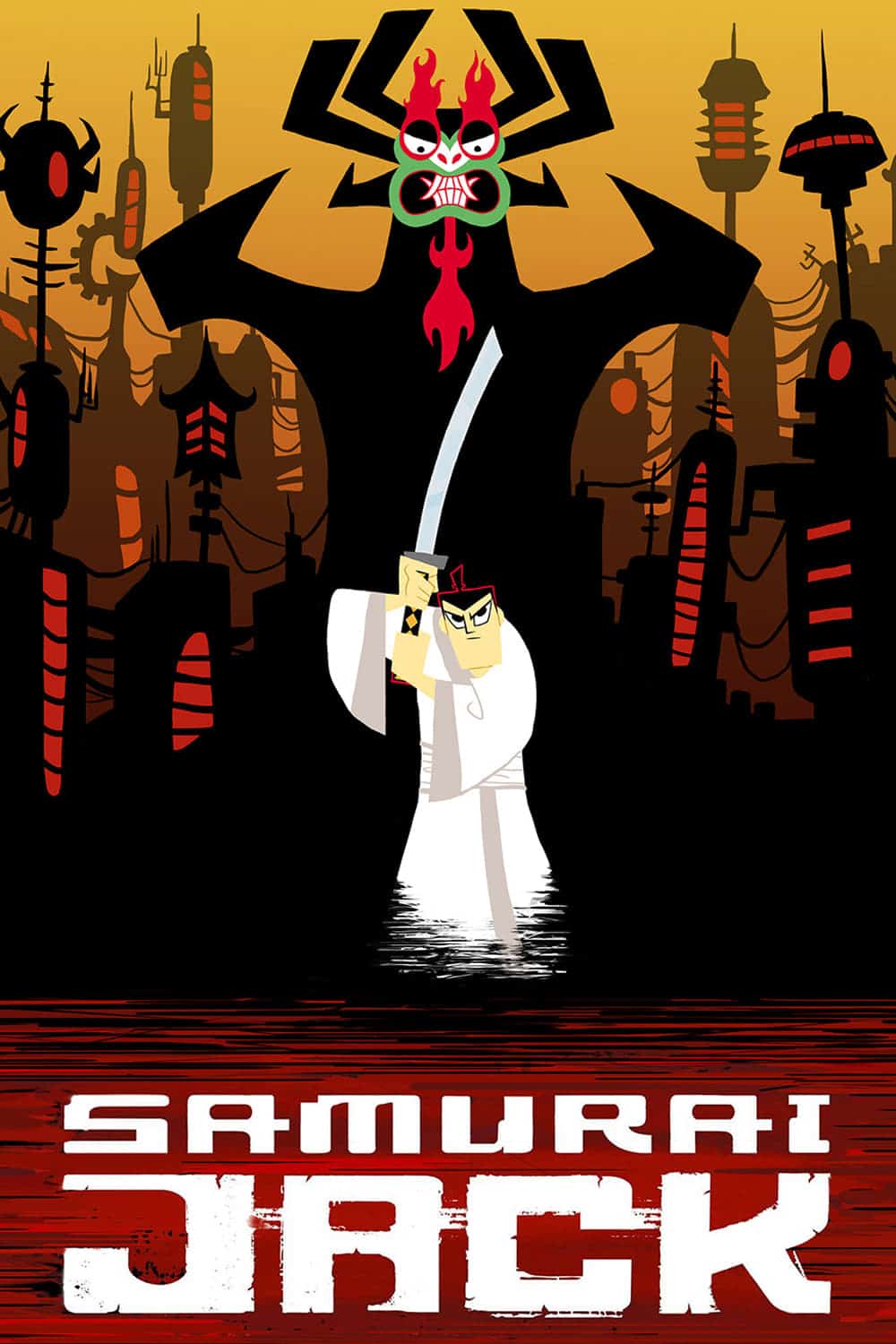
Visually, Samurai Jack was a radical departure from its contemporaries. While most 90s and early 2000s cartoons relied on heavy black outlines to separate characters from backgrounds, Tartakovsky utilized a “lineless” aesthetic.
Characters and environments are built from bold blocks of color and sharp geometric shapes. This approach revived the spirit of UPA’s 1950s “limited animation,” but infused it with a high-budget, painterly elegance. By removing the outlines, the characters become part of the world’s texture, allowing for breathtaking play with silhouettes and negative space. A battle isn’t just a fight; it’s a shifting arrangement of shapes and shadows.
3. A Cinematic Hybrid: Kurosawa Meets Westerns
Samurai Jack is as much a tribute to live-action cinema as it is to animation. Tartakovsky drew heavy inspiration from the samurai epics of Akira Kurosawa and the “Spaghetti Westerns” of Sergio Leone.
- The Cinematic Frame: The show frequently utilizes a “cinemascope” wide-screen format, even on standard TV aspect ratios.
- Split-Screens: Much like 1970s action cinema, the use of multi-panel frames allows the audience to see a single action from three different angles simultaneously, building unbearable tension.
- Scale and Isolation: By placing a tiny hero figure against vast, panoramic, and often empty backgrounds, the show emphasizes Jack’s loneliness in a world that is not his own. The environment becomes a character itself—vast, alien, and overwhelming.
4. The Legacy of “Primal” and Beyond
The minimalism pioneered in Samurai Jack wasn’t just a one-off success; it set the stage for the future of adult animation. We see its DNA in Tartakovsky’s later masterpiece, Primal, which took the “no dialogue” concept to its absolute limit. It reminded the industry that animation is a visual medium first. Jack taught a generation of creators that you don’t need to fill every second with noise to hold an audience’s attention—sometimes, the most powerful thing you can do is let the image breathe.
Recommended Reading & Resources
🎥 Essential “Minimalist” Episodes:
- “Jack and the Three Blind Archers”: Perhaps the greatest example of sound design and sensory storytelling in animation history.
- “The Haunted House”: A masterclass in atmosphere, using limited color palettes and shadows to create dread without words.
📚 Books for the Creative Mind:
- “The Art of Samurai Jack”: An essential coffee-table book featuring layouts that look more like museum-grade graphic art than cartoon stills.
🔗 Pro-Tip for Creators: Study the storyboards of Genndy Tartakovsky. They reveal how he uses “pacing” and “timing” to create action that feels fast-paced despite having fewer drawings than a standard Disney feature.
Share this content:
Discover more from Feridun Demir
Subscribe to get the latest posts sent to your email.