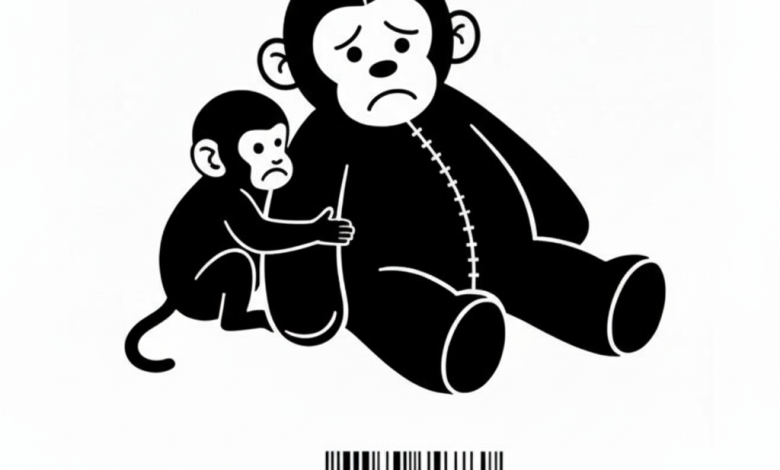
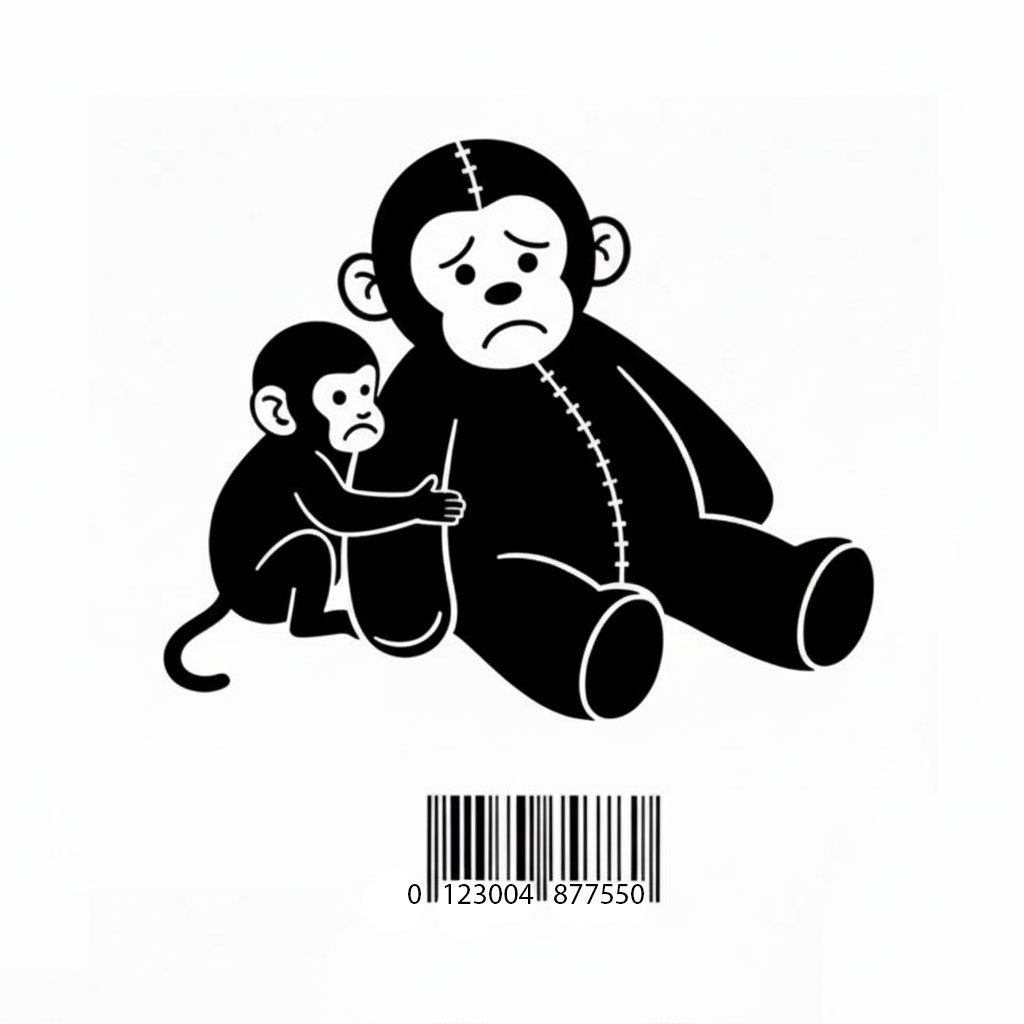
You’ve likely seen the footage circulating on social media recently: a tiny macaque infant named Punch, at a zoo in Japan, clinging desperately to a plush orangutan toy. Rejected by his biological mother, Punch began his life holding onto the synthetic arms of a stuffed animal.
At first glance, it appears to be a “heart-wrenching yet cute” viral story. However, if we pause to reflect, Punch’s story is not just a tragedy of a single infant; it is a concise summary of the modern world’s distorted relationship with nature.
Where Was Punch Born?
Punch was not captured from a forest and thrown into a cage. He was born at the Ichikawa City Zoo in Japan. His life began within concrete boundaries from day one.
Today, many zoos operate under the banners of “conservation,” “breeding programs,” and “species continuity.” Most animals are no longer snatched from the wild; they are born into captivity. Their pedigrees are tracked, genetic pairings are meticulously planned, and “surplus” individuals are transferred between institutions.
Everything is regulated, recorded, and legal. International frameworks like CITES aim to control the trade of endangered species. Yet, despite this “ethical” scaffolding, the core reality remains unchanged: A living being becomes a cog in a corporate system.
Clinging to Plush: Cuteness or Despair?
While the images of Punch hugging his toy garnered millions of likes, experts view this behavior not as “cute,” but as a symptom of a profound biological void.
For primate infants, a mother is not merely a food source; she represents security, social learning, and identity. When rejected, an infant will turn to any object for comfort. The plush toy is a “surrogate mother.”
But this substitute can never replace a genuine bond. While we watch from our screens, saying “poor thing” and sharing the video, we often forget that these viral moments increase the zoo’s visibility and foot traffic. Punch ceases to be an individual and transforms into a “story”—a piece of high-value content.
Modern Captivity: Chains Without Iron
Modern zoos are no longer the dark, cramped dungeons of the past. They feature spacious, clean, and “natural-looking” enclosures. However, naturalism is not nature.
For a macaque, nature means:
- The distance required to flee or roam.
- Social behaviors learned from its own kind.
- Knowledge passed down through generations.
For an infant born in captivity, the chains are invisible because they have never known another reality. This is the tragedy of Punch: He is grieving for a loss he never even got to experience.
Is a Return to the Wild Possible?
The question often arises: “Can’t he be released once he’s better?”
Theoretically, it sounds ideal. However, a primate raised by humans, accustomed to artificial environments, and deprived of natural troop dynamics has a near-zero chance of survival in the wild. Nature is not just a collection of trees; nature is a sum of learned behaviors. Even if Punch grows up, the synthetic bond he formed with that plush toy has already dictated the trajectory of his life.
The Core Issue: Conservation or Exhibition?
It would be unfair to categorize all zoos the same way. There are vital species protection projects and legitimate rehabilitation centers. But we must ask:
If an institution’s financial sustainability depends on visitor numbers, how independent can the stories of these animals remain? Where does conservation end and exhibition begin?
A Plush Toy is Not a Solution
Punch’s reliance on a toy tells us this: The modern human is attempting to fill the void we carved out of nature with synthetic solutions. Larger cages, more comfortable enclosures, softer toys…
But freedom is not the same as comfort. A cage can be sterile. A procedure can be legal. A plush toy can be soft. But there is no synthetic compensation for a life stripped of its essence.
Punch’s story may fade from the headlines in a few weeks, but the question remains: Do we truly want what’s best for the animal, or are we just looking for a “happy ending” to soothe our own consciences? Perhaps what we need is not a bigger plush toy, but a global consciousness where living beings are no longer treated as spectacles for consumption.
Share this content:
Discover more from Feridun Demir
Subscribe to get the latest posts sent to your email.