Jerry Moriarty Dies at 88: The Quiet Master Who Brought Painting into Comics Leaves an Enduring Legacy

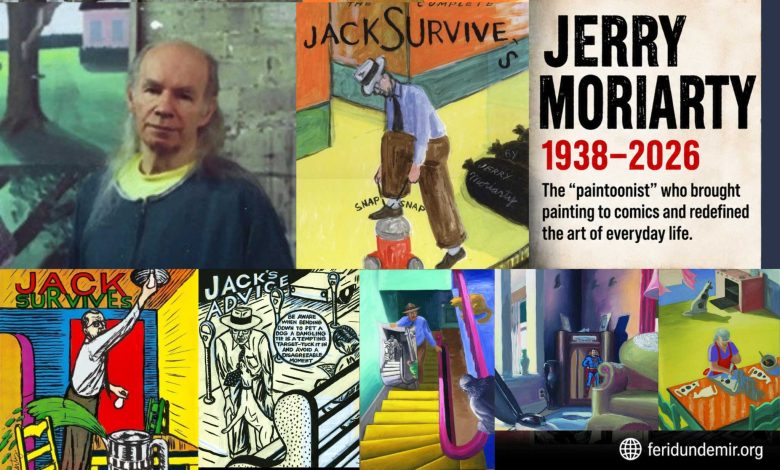
One of the most original and influential figures in alternative comics, Jerry Moriarty, passed away on March 25, 2026, at the age of 88. Describing himself as a “paintoonist,” Moriarty was widely regarded as a pioneer who treated comics not simply as sequential storytelling but as an art form where painting, memory, and visual poetry could coexist. Although he deliberately stayed outside the mainstream throughout his career, his work profoundly influenced generations of cartoonists, illustrators, and graphic novelists.
Today, names such as Art Spiegelman, Chris Ware, Charles Burns, and Ben Katchor are synonymous with alternative comics. Yet behind many of these celebrated creators stood Jerry Moriarty—a quietly influential artist whose work reshaped the possibilities of the medium without ever seeking fame.
Chris Ware once described him simply as “one of the great geniuses of the comic strip.” Despite such extraordinary praise from his peers, Moriarty remained largely unknown to the wider public. He rarely sold his paintings, avoided the commercial art market, and spent much of his professional life teaching at New York’s School of Visual Arts. For Moriarty, art was never about popularity or financial success; it was a lifelong search for a more honest way of seeing and representing ordinary life.
RAW Magazine and a Turning Point in Comics
Jerry Moriarty’s reputation grew significantly after his work appeared in RAW, the groundbreaking magazine founded by Art Spiegelman and Françoise Mouly in the early 1980s.
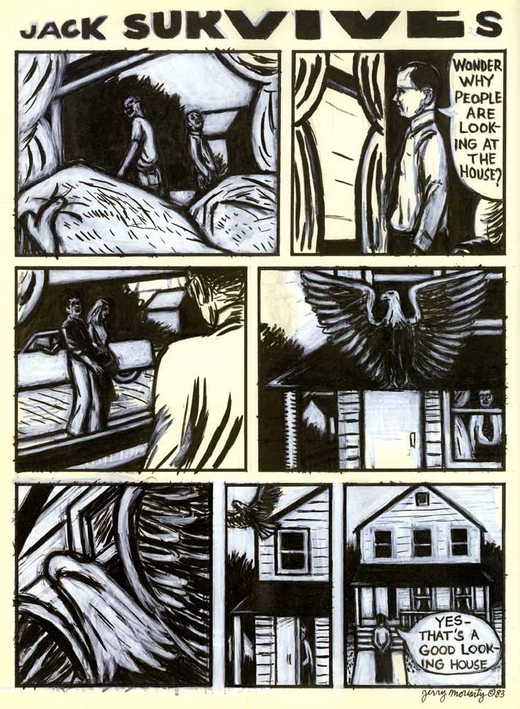
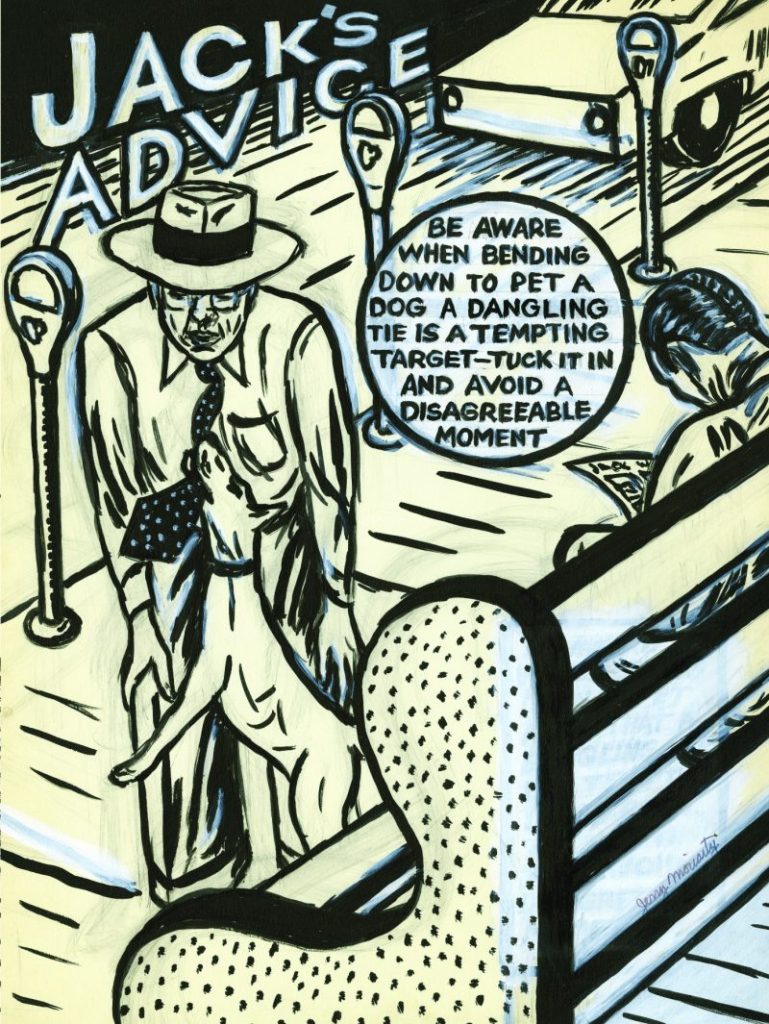
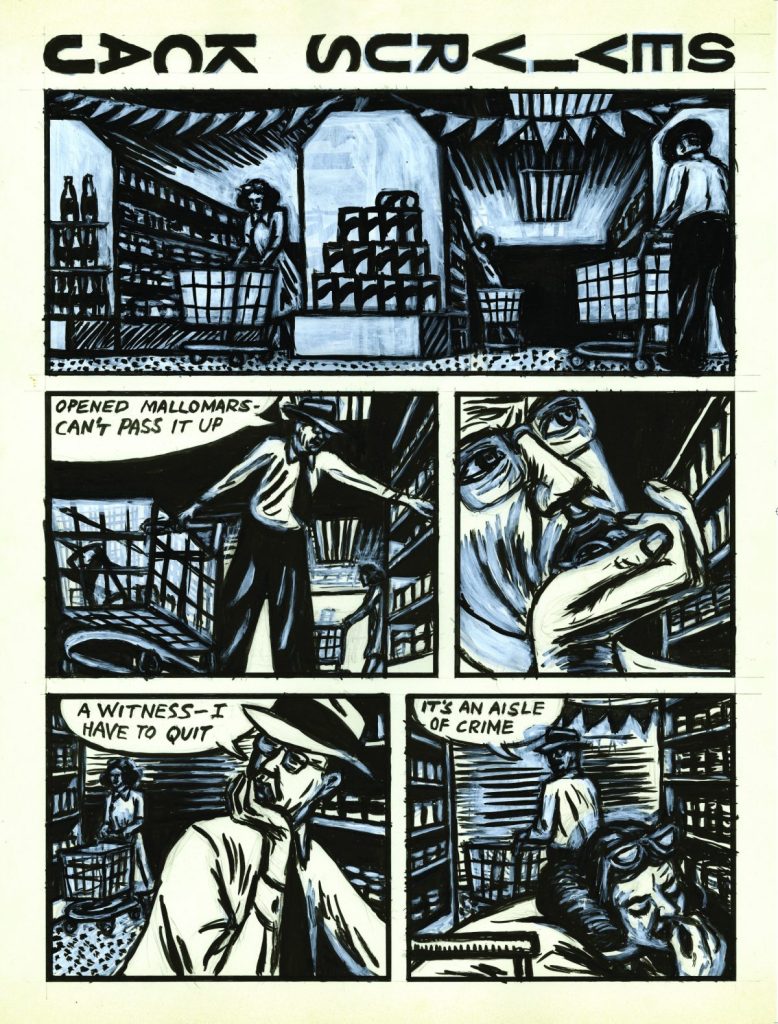
RAW became one of the defining publications of alternative comics, introducing readers to artists who challenged traditional storytelling and expanded the artistic language of the medium. It was there that Moriarty’s most celebrated work, Jack Survives, found its audience.
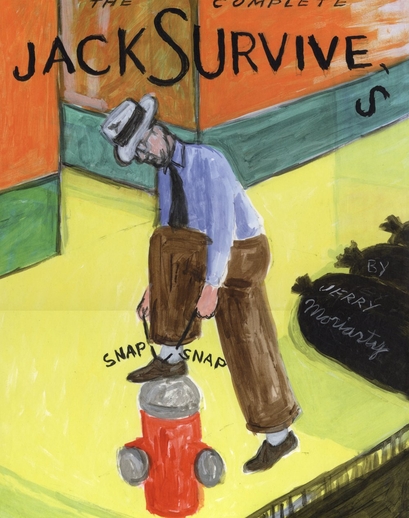
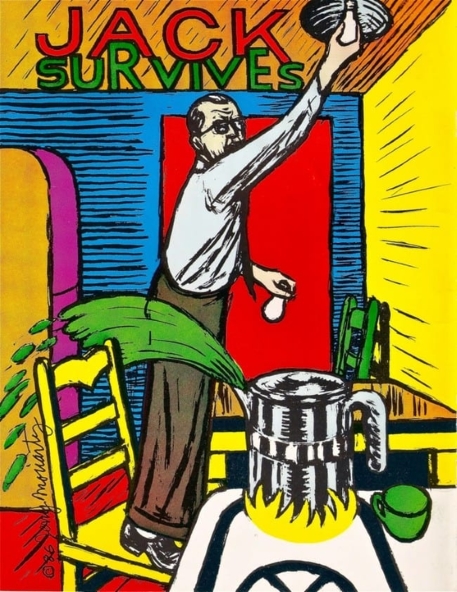
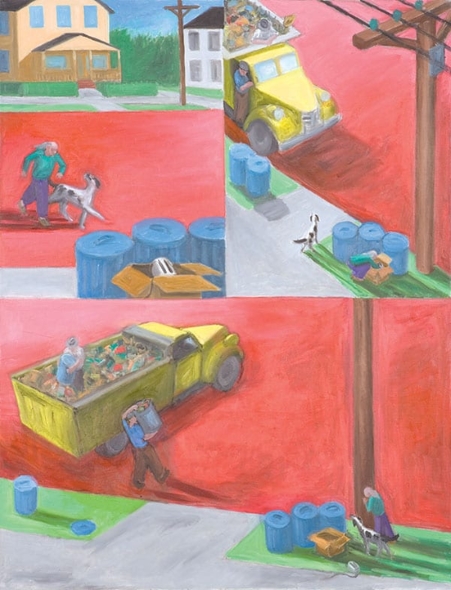
Unlike superhero adventures or dramatic narratives, Jack Survives focused on the smallest moments of everyday existence. Jack loses his wallet, becomes tangled in a dog’s leash, walks through his neighborhood, or quietly reflects on the world around him. These seemingly insignificant events became vehicles for exploring loneliness, memory, aging, family relationships, and the fragile emotional landscape of ordinary people.
Rather than relying on action or elaborate plots, Moriarty transformed silence and stillness into narrative tools. His comics invited readers to slow down and observe the emotional weight hidden inside everyday life.
Reflecting on the character in his 2009 collection The Complete Jack Survives, Moriarty wrote:
“Jack is an average man wanting to be average. I am an average man who doesn’t want to be average.”
The sentence has since become one of the clearest expressions of his artistic philosophy.
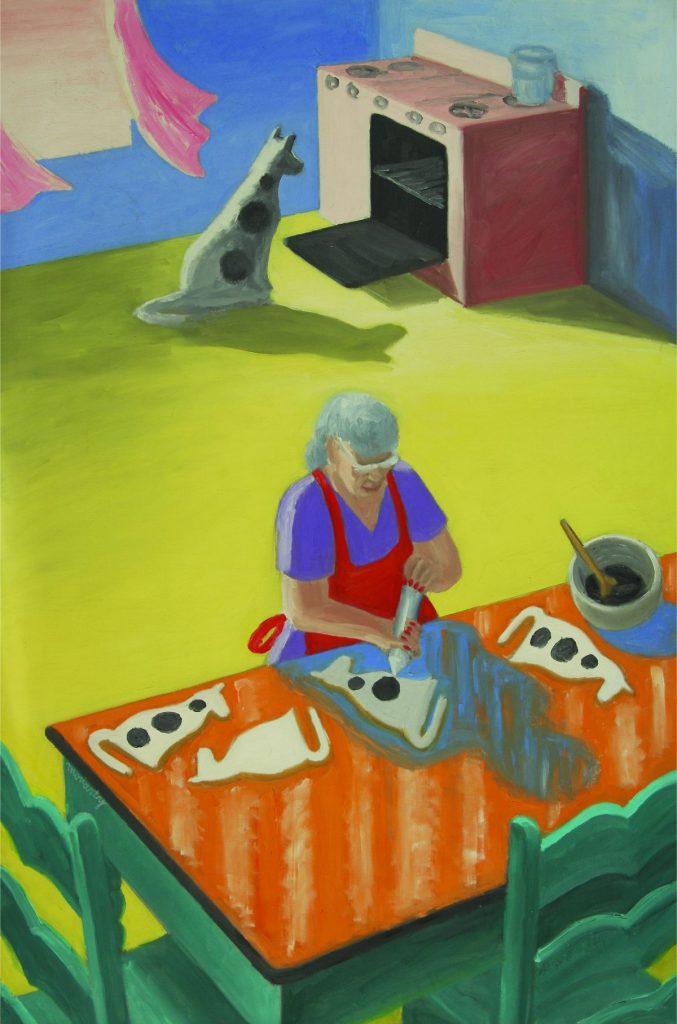
The “Paintoonist”
Jerry Moriarty never considered himself simply a cartoonist.
Instead, he coined the term “paintoonist,” a word that perfectly reflected his unique approach to visual storytelling.
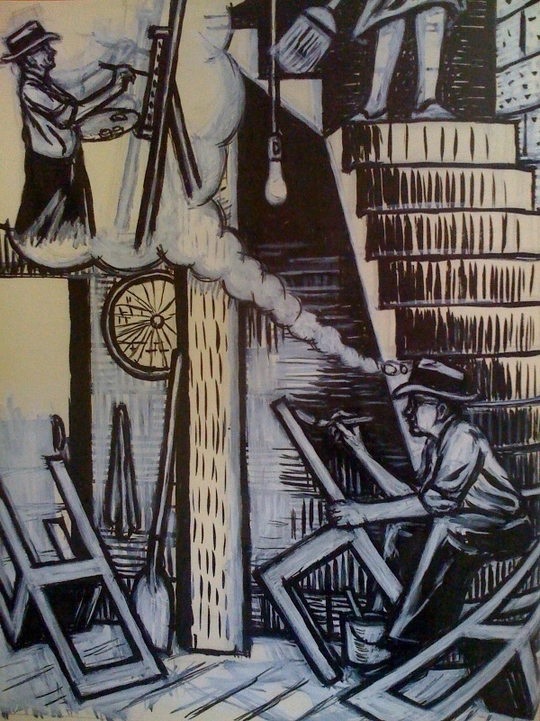
For Moriarty, each comics panel functioned as an individual painting. Composition, light, texture, color, and brushwork were as important as dialogue or plot. His pages demanded to be contemplated rather than quickly consumed.
His creative process was equally distinctive.
Ideas began as written notes before evolving into rough sketches. Those sketches became brush-and-ink drawings, then acrylic paintings, and finally, in some cases, large-scale oil paintings. Moriarty believed that every stage introduced new possibilities and fresh ideas rather than simply refining the previous version.
During an interview with Chris Ware, he summarized his method in a simple but revealing phrase:
“First the Word, then the Image.”
He also worked almost entirely from memory, rarely using photographic references. Moriarty believed that the human mind naturally fills in missing information and that suggestion often creates a stronger emotional reality than literal representation.
An Artist Who Refused the Spotlight
One of the most remarkable aspects of Jerry Moriarty’s career was his deliberate distance from fame.
He began as a magazine illustrator during the 1960s, heavily influenced by artists such as Norman Rockwell. However, exposure to Abstract Expressionism fundamentally changed his understanding of art and eventually led him toward a deeply personal visual language.
Throughout his career, Moriarty rejected many of the conventions of both the commercial illustration world and the contemporary art market. He often refused to sell his paintings, preferring artistic independence over commercial recognition.
Ironically, this decision also contributed to his relative obscurity.
While collectors and galleries largely overlooked him, fellow artists recognized his importance. Chris Ware famously compared Moriarty’s work to “Edward Hopper taking up songwriting,” a comparison that captures the unique blend of quiet American realism, emotional introspection, and poetic storytelling found throughout his work.
A Lasting Influence on Contemporary Comics
Today, Jerry Moriarty’s influence can be found throughout contemporary independent comics.
His work helped demonstrate that comics could exist comfortably alongside painting, literature, and fine art without sacrificing their unique identity. Long before graphic novels became accepted by museums and major cultural institutions, Moriarty was already treating comics as a serious artistic medium.
Artists such as Art Spiegelman and Chris Ware have openly acknowledged the importance of his work, and many younger cartoonists continue to draw inspiration from his patient, contemplative approach to storytelling.
Perhaps his greatest achievement was teaching readers that dramatic events are not necessary for profound narratives. In Moriarty’s pages, silence carries meaning, ordinary gestures become emotionally significant, and everyday life reveals extraordinary depth.
An Enduring Legacy
Jerry Moriarty leaves behind a body of work that is relatively small but extraordinarily influential.
Rather than transforming comics through spectacle or innovation for its own sake, he expanded the medium through quiet observation, painterly craftsmanship, and emotional honesty.
Today, Jack Survives is recognized not only as a landmark of alternative comics but also as a reminder that the most powerful stories often emerge from the smallest moments of everyday life.
Jerry Moriarty may have spent much of his career outside the spotlight, but his vision permanently changed how artists and readers think about comics. His work continues to inspire those who believe that sequential art can be as thoughtful, intimate, and enduring as any painting hanging in a museum.

Share this content:
Discover more from Feridun Demir
Subscribe to get the latest posts sent to your email.