Persepolis Creator Marjane Satrapi Dies at 56, Leaving an Enduring Legacy in Comics and Cinema

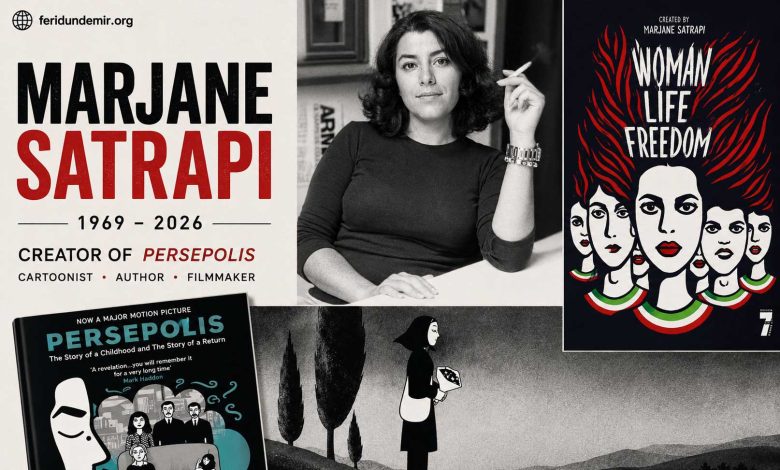
Marjane Satrapi, the Iranian-born French cartoonist, writer, filmmaker, and creator of the internationally acclaimed graphic novel Persepolis, has died in Paris on June 4, 2026, at the age of 56. Her passing has prompted an outpouring of tributes from across the worlds of comics, animation, literature, and cinema.
According to reports in the international press, Satrapi had been living through a profound period of grief following the death of her husband, Swedish producer and actor Mattias Ripa, who passed away in 2025. Family members and close friends described the artist as having struggled deeply with the loss.
Tributes from the Cultural and Political Worlds
The news of Satrapi’s death quickly spread across the globe, prompting heartfelt tributes from political leaders and cultural institutions.
French President Emmanuel Macron praised Satrapi as “an extraordinary artist who transformed her childhood in Iran into a universal tale, a passionate defender of freedom whose work resonated around the world.”
The Cannes Film Festival also paid tribute, highlighting Satrapi’s unique ability to blend the joy of artistic creation with the pain of exile. Festival organizers noted that Persepolis helped establish animation as a respected form of cinematic storytelling on the international stage.
From Iran to the World
Born in Rasht, Iran, in 1969, Marjane Satrapi witnessed the Iranian Revolution and the dramatic social changes that followed. At the age of 14, she was sent to Austria for her education before eventually settling in France, where she built her artistic career.
Satrapi achieved worldwide recognition through her autobiographical graphic novel Persepolis, first published in 2000. The work recounts her childhood and adolescence during and after the Iranian Revolution, exploring themes of identity, war, exile, and personal freedom through stark black-and-white illustrations.
The book became an international bestseller and is widely regarded as one of the defining graphic novels of the modern era.
A Transformative Figure in Graphic Literature
More than a successful cartoonist, Satrapi was a transformative figure in the evolution of graphic storytelling.
Persepolis demonstrated that comics could serve as a powerful medium for history, politics, memory, and personal testimony, expanding public perceptions of what graphic narratives could achieve. The work helped bring graphic novels into mainstream literary and academic discussions around the world.
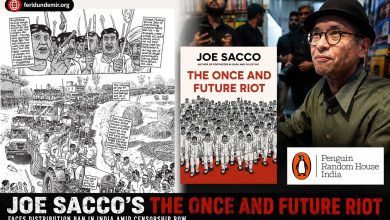
Many critics place Persepolis alongside Art Spiegelman’s Maus and the documentary comics of Joe Sacco as one of the landmark works that redefined the possibilities of the medium.
Satrapi’s success also contributed to greater visibility for women creators in the international comics industry and inspired a new generation of artists to explore autobiographical storytelling.
Success Beyond Comics
Satrapi successfully expanded her creative vision into filmmaking.
The animated adaptation of Persepolis, which she co-directed, won the Jury Prize at the 2007 Cannes Film Festival and received an Academy Award nomination for Best Animated Feature.
She later directed several acclaimed films, including The Voices (2014), starring Ryan Reynolds, and Radioactive (2019), a biographical drama about Nobel Prize-winning scientist Marie Curie.
A Voice for Women, Freedom, and Human Rights
In recent years, Satrapi became one of the most prominent international voices supporting women’s rights in Iran.
Following the death of Mahsa Amini and the protests that erupted across the country, Satrapi actively advocated for the Iranian women’s movement. In 2023, she collaborated with 20 artists and writers on Woman, Life, Freedom, a graphic anthology documenting the struggle for civil liberties and women’s rights in Iran.
The project became an important cultural record of one of the most significant protest movements in contemporary Iranian history.
An Enduring Cultural Legacy
Throughout her career, Marjane Satrapi explored universal themes including exile, identity, freedom, memory, and resistance. Her work crossed cultural and political boundaries, bringing deeply personal experiences to a global audience.
By transforming her own life story into a narrative that resonated with readers around the world, Satrapi left behind far more than award-winning books and films. She demonstrated how comics can challenge stereotypes, preserve memory, and give voice to those living through political and social upheaval.
As readers, artists, filmmakers, and admirers reflect on her life and work, Marjane Satrapi will be remembered as one of the most influential and original voices in contemporary graphic literature.
Today, the worlds of comics, animation, and cinema bid farewell to a pioneering artist whose impact will continue to inspire generations to come.
Share this content:
Discover more from Feridun Demir
Subscribe to get the latest posts sent to your email.