Geodesy World Meets Humor: Winners of the 1st Geodesy Cartoon Competition Announced!

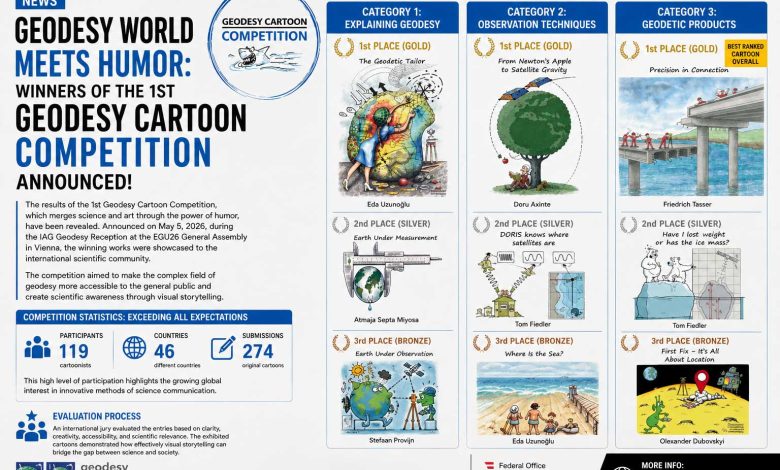
The results of the 1st Geodesy Cartoon Competition, which merges science and art through the power of humor, have been revealed. Announced on May 5, 2026, during the IAG Geodesy Reception at the EGU26 General Assembly in Vienna, the winning works were showcased to the international scientific community.
The competition aimed to make the complex field of geodesy more accessible to the general public and create scientific awareness through visual storytelling.
📊 Competition Statistics: Exceeding All Expectations
Despite being in its inaugural year, the competition received significant global interest:
- Participants: 119 cartoonists from 46 different countries.
- Submissions: A total of 274 original cartoon entries.
This high level of participation highlights the growing global interest in innovative methods of science communication.
🏆 Winners by Category
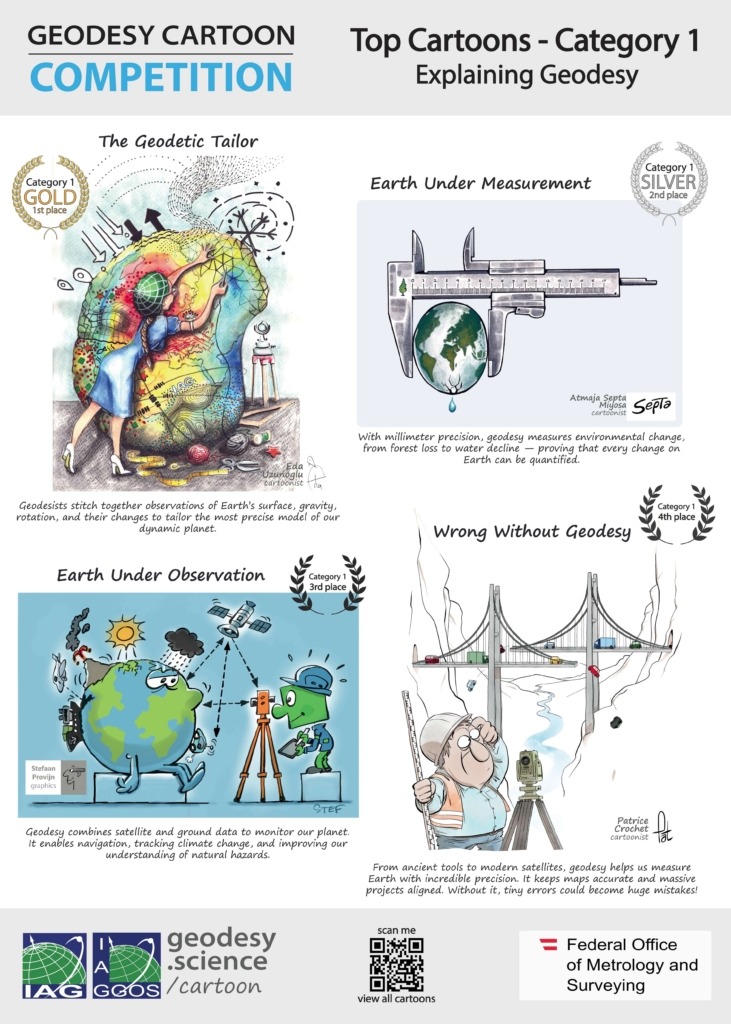
Category 1: Explaining Geodesy
- 1st Place (Gold): Eda Uzunoğlu – “The Geodetic Tailor”.
- 2nd Place (Silver): Atmaja Septa Miyosa – “Earth Under Measurement”.
- 3rd Place (Bronze): Stefaan Provijn – “Earth Under Observation”.
- 4th Place: Patrice Crochet – “Wrong Without Geodesy”.
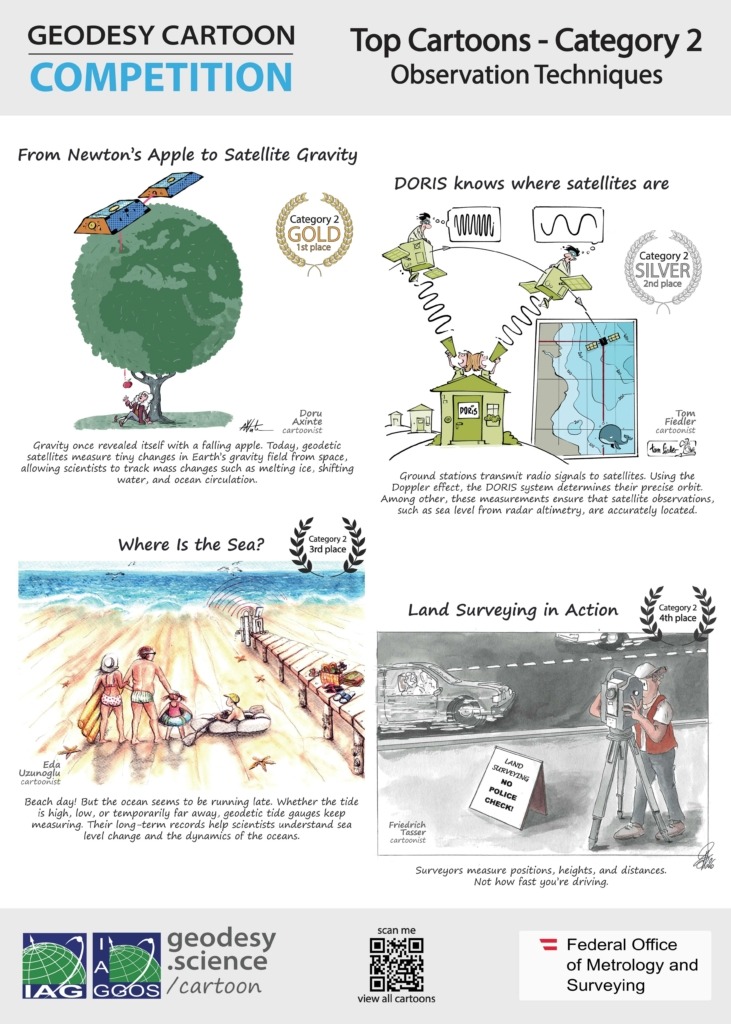
Category 2: Observation Techniques
- 1st Place (Gold): Doru Axinte – “From Newton’s Apple to Satellite Gravity”.
- 2nd Place (Silver): Tom Fiedler – “DORIS knows where satellites are”.
- 3rd Place (Bronze): Eda Uzunoğlu – “Where Is the Sea?”.
- 4th Place: Friedrich Tasser – “Land Surveying in Action”.
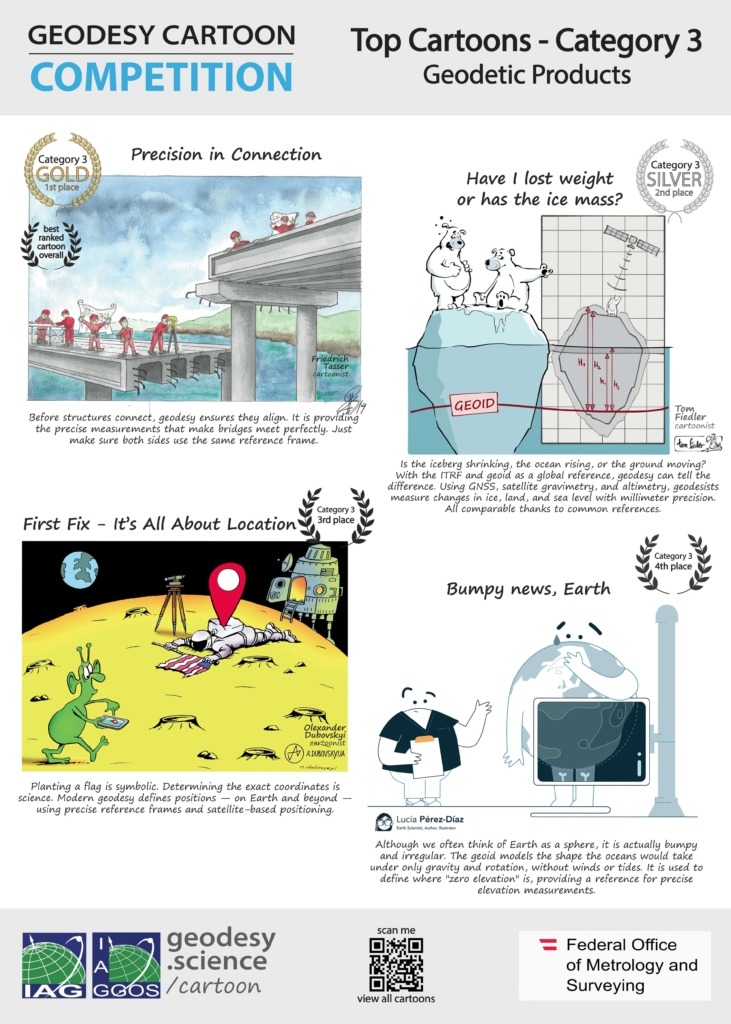
Category 3: Geodetic Products
- 1st Place (Gold & Best Ranked Cartoon Overall): Friedrich Tasser – “Precision in Connection”.
- 2nd Place (Silver): Tom Fiedler – “Have I lost weight or has the ice mass?”.
- 3rd Place (Bronze): Olexander Dubovskyi – “First Fix – It’s All About Location”.
- 4th Place: Lucia Pérez-Díaz – “Bumpy news, Earth”.
⚖️ Evaluation Process
An international jury evaluated the entries based on clarity, creativity, accessibility, and scientific relevance. The exhibited cartoons demonstrated how effectively visual storytelling can bridge the gap between science and society.
Share this content:
Discover more from Feridun Demir
Subscribe to get the latest posts sent to your email.